Chùa Xuân Thụ
Bắc Ninh
Overview & history
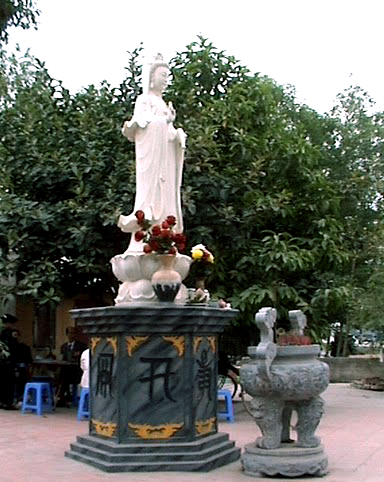
Chùa Xuân Thụ is a Buddhist pagoda in Bắc Ninh, Vietnam. Its location comes from OpenStreetMap community data; further details will be added when reliable sources become available.
Photos
📷 Contribute photosVisiting tips
- Dress modestly; remove hats and keep quiet inside the main hall.
- Incense, flowers and offerings are usually sold right outside the gate; light an odd number of sticks (1 or 3).
- Most pagodas open from early morning to evening and are free to enter (some major sites charge a small scenic fee).
- Full-moon days, the 1st of the lunar month and Tet are very crowded; visit on weekday mornings for a quiet experience.
- Ask permission before photographing inside shrines; do not touch statues or altar objects.
Read more & references
Useful links to learn more before your visit:
Location
Coordinates: 21.12106, 105.96736
🧭 Directions on Google MapsReferences
Other pagodas in Bắc Ninh

Chùa Bổ Đà
Bổ Đà Pagoda, also known as Bổ Pagoda, Tam Giáo Pagoda, and by its formal name Tứ Ân Tự (四恩寺), is a pagoda situated on Phượng Hoàng Mountain (Bổ Đà Sơn), on the left bank of the Cầu River, in the area of Thượng Lát residential group, Vân Hà ward, Bắc Ninh province (during the feudal era, this was Tiên Lát village, Tiên Lát canton, Yên Việt district, Bắc Hà prefecture, former Kinh Bắc region). The pagoda is located about 10 km west of the centre of Bích Động town. Bổ Đà Pagoda is one of the most unique pagodas in the Kinh Bắc region and is a major Buddhist centre of the Trúc Lâm Yên Tử Zen school. The pagoda was recognised as a Special National Monument in 2016, and the set of Buddhist scriptures carved on persimmon wood preserved at the pagoda is considered the oldest of the Lâm Tế Zen lineage.
Bổ Pagoda is one of the few places that still preserves the original features of ancient Vietnamese traditional architecture. The pagoda has a unique and distinctive architecture compared to other traditional pagodas in northern Vietnam, with the most beautiful and largest stupa garden in Vietnam, many valuable antiques, and a rich treasury of Han-Nom heritage. This is also a place where mountains and water harmonise, with the landscape and space imbued with legend, surrounded by hills, mountains, and villages. The pagoda venerates the Three Teachings (Tam giáo), including Avalokiteśvara Bodhisattva (Quán Thế Âm Bồ Tát), the Three Patriarchs of Trúc Lâm (Trần Nhân Tông, Pháp Loa, and Huyền Quang), Confucius, and others. Books made of bamboo and stone that have been left behind are still used to train those joining the Lâm Tế school (Sơn Môn Bổ Đà) according to old customs. The Bổ Đà Pagoda complex is a collection of relics including: the ancient pagoda named Bổ Đà Sơn (commonly referred to as Bổ Đà Pagoda, Bổ Pagoda, or Quán Âm Pagoda), the main Tứ Ân Pagoda, and Am Tam Đức (built later, during the Later Lê dynasty). In addition, on Bổ Đà Mountain there is also a temple dedicated to General Thạch (i.e. Thạch Tướng Đại Vương – who contributed to helping the 16th Hùng King resist foreign invaders).
The current abbot of the pagoda is Venerable Thích Tục Vinh (secular name: Trương Lý Vinh), a member of the Executive Council of the Vietnam Buddhist Sangha, Bắc Giang province, term V (2017–2022).
Chùa Trẻ
Chùa Trẻ, also known as Mục Ngưu Tự, has existed for over 300 years and is located in Yên Khê village, Tiền Phong ward, Bắc Ninh province, Vietnam.

Chùa Vĩnh Nghiêm (Bắc Ninh)
Vĩnh Nghiêm Pagoda, also known as Đức La Pagoda, is an ancient pagoda located in Đức La village, Tân An ward, Bắc Ninh province, Vietnam. The pagoda is recognised as a Buddhist centre, a place for training monks for the whole country, and the birthplace of the Three Patriarchs of the Trúc Lâm Zen sect of Vietnamese Buddhism. In 2015, the pagoda was recognised as a Special National Relic.

Hoa Khê Tự
Hoa Khê Tự Pagoda is a Buddhist temple located in Yên Khê hamlet, Tiền Phong ward, Bắc Ninh province (formerly also known as An Khê village, under Mỹ Cầu canton).
In 1805, Emperor Gia Long established An Khê village as Yên Khê Commune. At that time, Yên Khê had 306 mẫu, 3 sào, 1 thước, and 5 tấc of land; of which public land accounted for 3 mẫu, 2 sào, and 3 thước; private land accounted for 282 mẫu, 6 sào, 3 thước, and 8 tấc. In addition, there were also lands for the thần từ (ancestral temple), thổ trạch (residential land), and viên trì (ponds and gardens), among others.
🏯
Khu di tích và danh thắng Tây Yên Tử
The Tây Yên Tử Heritage and Scenic Site comprises a system of historical and cultural relics, as well as famous scenic spots, located on the western and northern slopes of the Yên Tử mountain range, within the territory of Bắc Ninh province. Tây Yên Tử stretches from Sơn Động commune to Bắc Giang ward. Tây Yên Tử is home to a system of pagodas, stupas, relics, and the majestic forests and mountains associated with the formation of the Trúc Lâm Yên Tử Zen sect during the Trần dynasty, such as Vĩnh Nghiêm Pagoda (Tân An ward), Am Vãi Pagoda (Nam Dương commune), Đồng Thông (Tây Yên Tử commune), and others. The Tây Yên Tử relic system, together with Đông Yên Tử and the Trần Dynasty Historical Site in Đông Triều, forms the Yên Tử Heritage and Scenic Complex, for which a dossier was being prepared in 2017 to propose UNESCO recognition as a World Heritage Site.

Thổ Hà
Thổ Hà is a village in Việt Yên, Bắc Giang Province, northeastern Vietnam.