Chùa Trúc Lâm
Hưng Yên
Overview & history
Chùa Trúc Lâm is a Buddhist pagoda in Hưng Yên, Vietnam. Its location comes from OpenStreetMap community data; further details will be added when reliable sources become available.
Photos
📷 Contribute photosVisiting tips
- Dress modestly; remove hats and keep quiet inside the main hall.
- Incense, flowers and offerings are usually sold right outside the gate; light an odd number of sticks (1 or 3).
- Most pagodas open from early morning to evening and are free to enter (some major sites charge a small scenic fee).
- Full-moon days, the 1st of the lunar month and Tet are very crowded; visit on weekday mornings for a quiet experience.
- Ask permission before photographing inside shrines; do not touch statues or altar objects.
Read more & references
Useful links to learn more before your visit:
Location
Coordinates: 20.79295, 106.05246
🧭 Directions on Google MapsReferences
Other pagodas in Hưng Yên
🏯
Chùa Chuông
Chuông Temple (Vietnamese: Chùa Chuông, Chữ Hán: 金鐘寺, Sino-Vietnamese: Kim Chung Tự) is a Buddhist temple in Hưng Yên.

Chùa Keo Thái Bình
Keo Temple (Vietnamese: Chùa Keo, Official name: Thần Quang Tự (神光寺)) is a Buddhist temple in Vũ Thư District, Thái Bình Province, Vietnam. The temple was commenced in 1061 under the Lý dynasty near the Red River.
Chùa Thái Lạc
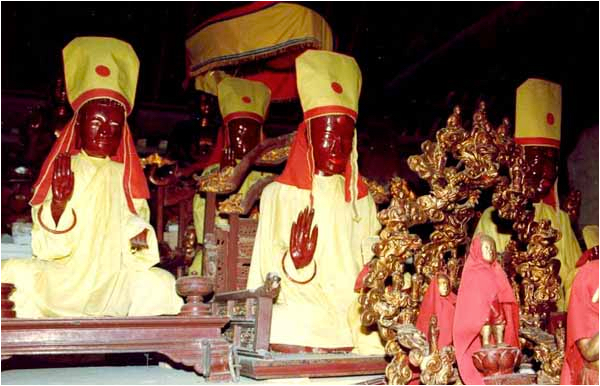
Thái Lạc Pagoda is located in Như Quỳnh commune, Hưng Yên province. The pagoda belongs to the Tứ Pháp (Four Dharmas) pagoda system and worships the Buddha and Pháp Vân. The pagoda is famous for its carved wooden panels dating from the Trần dynasty.
🏯
Chùa Chành
Chành Pagoda is located in Thái Bình ward, Hưng Yên province. It is a provincial-level historical site, recognised in 1995. The pagoda was newly restored in 2012 and was inaugurated on 5 November 2012. Every year, the pagoda holds a festival from the 1st to the 3rd day of the 3rd lunar month. It is a very sacred pagoda, well known to many devotees from near and far.
🏯
Chùa Hanh Cù
Hanh Cù Pagoda is now located in Hanh Cù hamlet, Vũ Quý commune, Kiến Xương district, formerly part of Đông Trung village, Kiến Xương prefecture. Đông Trung village (now divided into the two communes of Vũ Quý and Vũ Trung) was traditionally a cultured village with many đình (communal houses), temples, and pagodas in its hamlets. Due to the policy of scorched earth during the resistance against the French, the communal houses and pagodas were dismantled; today, in the two communes, only Hanh Cù Pagoda remains, while Đại Ngạn Pagoda is currently being restored.
🏯
Chùa Múa
Múa Pagoda, also known as Phượng Vũ Pagoda, is located in Thọ Lộc hamlet, Minh Khai commune, Vũ Thư district, Thái Bình province. This is an ancient pagoda built at the end of the 17th century during the Nguyễn dynasty. The pagoda is part of the Phượng Vũ temple-pagoda heritage complex. The pagoda is so named because, in the past, when Saint Láng Lý Triều Quốc Sư Từ Đạo Hạnh came to this land to teach the people how to cultivate crops, he saw a piece of land shaped like a phoenix spreading its wings to dance. Recognising the auspiciousness of the land, he established a pagoda there to worship the Buddha. Later, after he passed away and became a saint, the villagers, grateful to him, built a shrine in his honour.