Phổ Minh Pagoda (Buôn Ma Thuột)
Đắk Lắk(Chùa Phổ Minh (Buôn Ma Thuột))
Overview & history
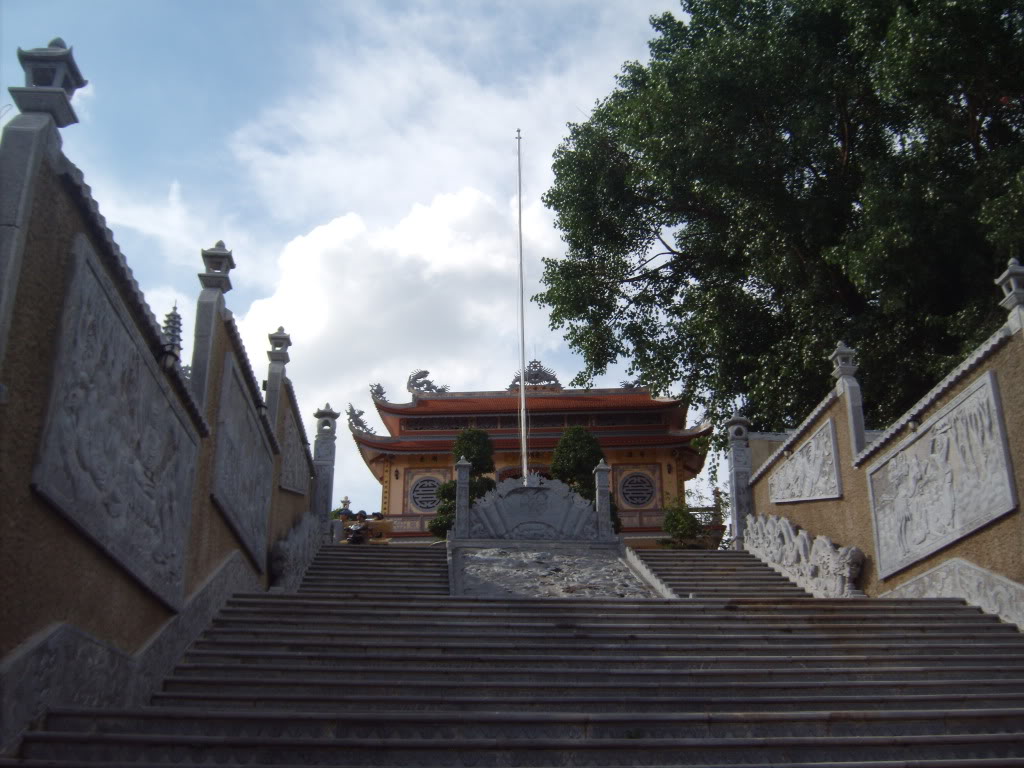
Phổ Minh Pagoda is considered the second largest pagoda in Buôn Ma Thuột city. The pagoda is located at 68 Nguyễn Cư Trinh Street, Tự An Ward, Buôn Ma Thuột City, Đăk Lăk Province, 1 km southeast of Buôn Ma Thuột city centre.
History of Formation
At the end of 1954, some monks from the Northern Vietnamese Sangha Buddhist Association, together with a number of Buddhist followers who migrated to the South, under the guidance of monks Thích Tâm Châu and Thích Độ Lượng, came to Buôn Ma Thuột to establish a Buddhist settlement named Hưng Đạo. The pagoda was also founded during the Buddha's Birthday (Vesak) in Buddhist calendar year 2499, the year Ất Mùi 1955, belonging to the Vĩnh Nghiêm Buddhist sect, under the system of Northern Vietnamese Buddhism.
The original premises of the pagoda were built at a cemetery area 500m west of its current location, and in the year Ất Tỵ 1965 it was moved to the new site. From then on, the pagoda officially took the name Phổ Minh.
In 1968, due to the impact of American bombs, the pagoda was 80% damaged. The pagoda was then extensively restored by monks and Buddhist followers, giving it the appearance it has today. In 1985, the pagoda underwent a second renovation to expand the Main Hall area to about 100m2. In 1991, the Buddhist followers installed a statue of Shakyamuni Buddha attaining enlightenment. In 1995, the pagoda built the Assembly Hall, in 1996 constructed the Di Lặc Bảo Cái (Maitreya's Precious Canopy), and in 1998 rebuilt the Ancestors' Hall.
Succession of Abbots
1955-1960: Venerable Thích Độ Lượng
1960-1963: Vacant (managed by Đại đức Thích Thanh Thuyên and Đại đức Thích Thanh Nhuệ).
1963-1969: Vacant (managed by the Executive Board of the Vĩnh Nghiêm Buddhist Association in Đăk Lăk, with Mr. Phạm Đức Quang (Lý Sầm) as Head of the Executive Board)
1969-2001: Most Venerable Thích Thiện Liên
2001-present: Đại đức Thích Trí Minh.
Overview
The pagoda's architecture is quite distinctive, with its grounds situated on a cool, scenic hill. The pagoda faces southwest and looks down over a valley. To truly embody the spirit of Northern Buddhist followers always turning towards their homeland and roots, the pagoda's followers used the old pagoda and its land as a đình (communal house) to worship the National Ancestor Hùng Vương, Saint Trần Hưng Đạo, and other national heroes.
Currently, the Main Hall has been expanded compared to before, with a total area of about 300m2. The decorative motifs and patterns are made in the style of Lý-Trần dynasty Buddhism. The pagoda's appearance is majestic, strongly bearing the identity of Northern Vietnamese Buddhism.
The Pagoda's Two Treasures
In the autumn of the year Canh Tý 1960, wishing for peace, the pagoda's Buddhist followers made a vow, then dismantled warheads and gunpowder, using the shell casings and bullet cases to cast a Great Bell weighing 400 kg and a statue of Amitābha Buddha. These are the two treasures and also the pride of the Buddhist followers of Phổ Minh Pagoda. Despite the pagoda being destroyed several times due to war, these two treasures have remained unharmed. At present, these two treasures are still enshrined at the pagoda.
Phổ Minh Ban Mê Co., Ltd.
Established on 12 March 2011 with the aim of conducting business to help cover expenses for the nursing home, providing a place of refuge for Buddhist followers. The business products include:
Bottled purified drinking water in 21l, 1.5l, 750ml, and 330ml sizes.
Incense, candles, and agarwood.
Ritual worship items.
Buddhist cultural publications.
Nursing Home
Construction began on 6 July 2011 (6 June, year Tân Mão) and is expected to be completed within 2 years.
The facility is designed to care for 300 elderly people and to carry out other charitable activities.
Photos
📷 Contribute photosVisiting tips
- Dress modestly; remove hats and keep quiet inside the main hall.
- Incense, flowers and offerings are usually sold right outside the gate; light an odd number of sticks (1 or 3).
- Most pagodas open from early morning to evening and are free to enter (some major sites charge a small scenic fee).
- Full-moon days, the 1st of the lunar month and Tet are very crowded; visit on weekday mornings for a quiet experience.
- Ask permission before photographing inside shrines; do not touch statues or altar objects.
Read more & references
Useful links to learn more before your visit:
Location
Coordinates: 12.67294, 108.04751
🧭 Directions on Google MapsReferences
Other pagodas in Đắk Lắk


