Trần Dynasty Relic Site at Đông Triều
Quảng Ninh(Khu di tích nhà Trần tại Đông Triều)
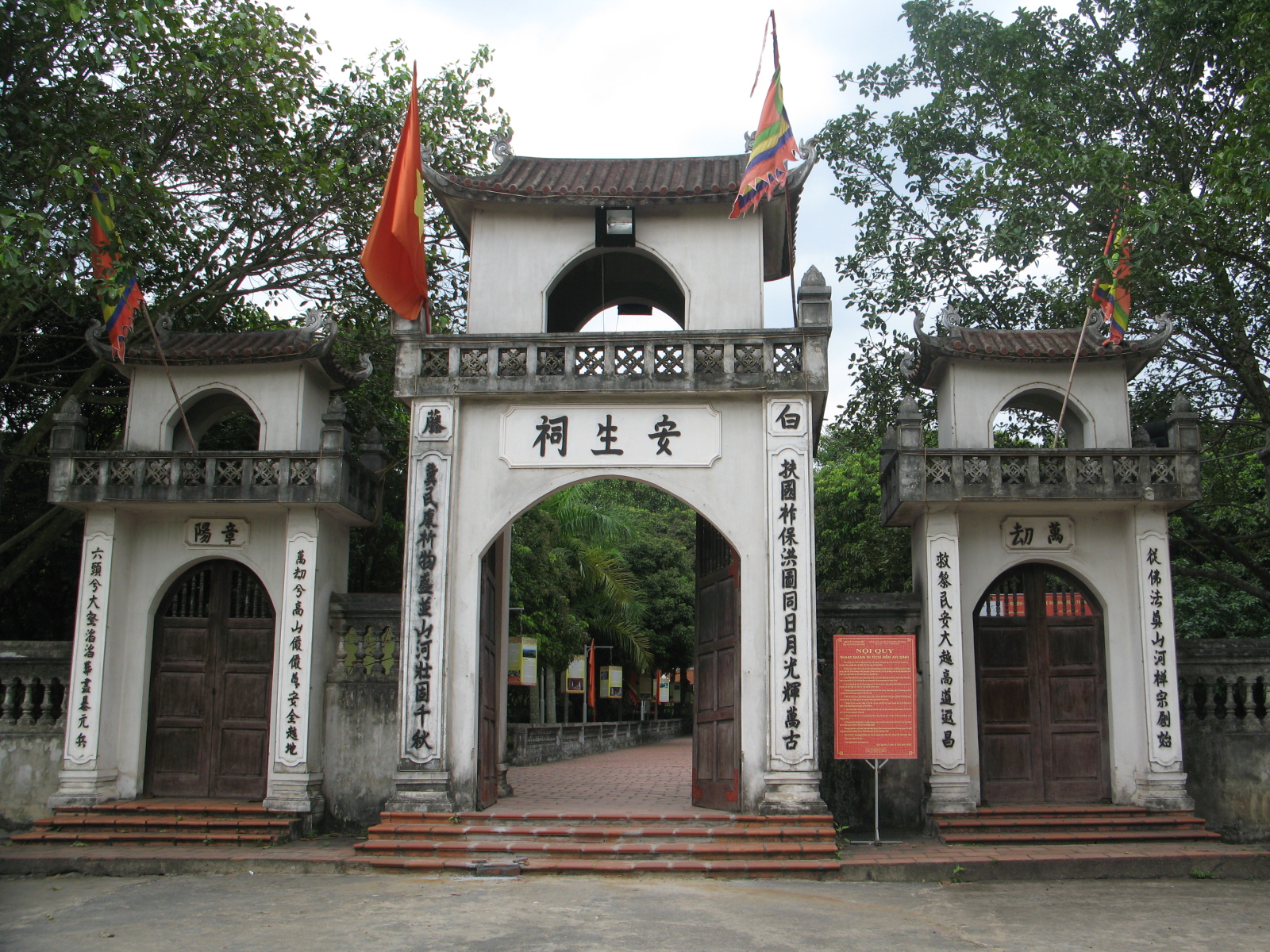
Overview & history
The Trần Dynasty Site in Đông Triều, Quảng Ninh Province, has been classified by the Prime Minister of Vietnam as a Special National Monument of exceptional importance. This is the most significant relic of the Trần Dynasty, located in the ancestral homeland, where the Trần ancestral temple (Thái miếu) and the tombs of the Trần kings and royal family are preserved, alongside the sites of the Bạch Đằng victory and Trúc Lâm Yên Tử. This site includes two monuments: the Trần ancestral temple and Ngoạ Vân Pagoda, both part of the Yên Tử – Vĩnh Nghiêm – Côn Sơn, Kiếp Bạc Complex of Monuments and Landscapes, which has been recognised as a UNESCO World Heritage Site since 2025.
History
The Trần Dynasty (1225–1400), renowned for its military and civil achievements, ushered in a heroic era in the history of nation-building and defence of the Vietnamese people. According to historical records and the Trần family genealogy, the Đông Triều region was the first settlement of the Trần clan in Vietnam. Later, this land was granted by King Trần Thái Tông to his elder brother, Trần Liễu, as a hereditary estate, which is why it always received special attention from the Trần kings.
The Trần Dynasty historical site was established in 1299, when King Trần Nhân Tông came to Yên Tử to practise asceticism and founded the Trúc Lâm Zen School. By the end of the 14th century, many tombs of Trần kings were built or relocated to Đông Triều. Alongside the construction of tombs, the court also built temples and shrines to worship the ancestors, as well as many religious architectural works to serve monastic practice and teaching. Therefore, this place became a sacred "holy land", concentrating many unique architectural works bearing the strong imprint of the Trần Dynasty. Đông Triều, meaning the eastern court, is also considered one of the most outstanding historical and cultural centres, and was the "Buddhist centre" of Đại Việt under the Trần. The current site has a total protected area of 22,063,054.5 m², comprising a system of tombs, temples, shrines, and religious structures associated with the history of the Trần Dynasty and the Trúc Lâm Zen School.
Overview
The Trần Dynasty Historical Site Complex in Đông Triều is located in the southern part of the Đông Triều mountain range, spanning three communes and wards: Đông Triều, An Sinh, and Bình Khê. It was specially classified as a national monument by the State in 1962. The master plan for the Trần Dynasty site includes 14 monuments: An Sinh Temple, Tư Phúc Tomb, Thái Temple, Thái Tomb, Mục Tomb, Ngải Sơn Tomb, Phụ Sơn Tomb, Nguyên Tomb, Đồng Hỷ Tomb, Ngọc Thanh Pagoda, Ngoạ Vân Pagoda, Tuyết Pagoda, Quỳnh Lâm Pagoda, and Hồ Thiên Pagoda.
Currently, this site has been approved by the Prime Minister for a comprehensive conservation and value-promotion plan under Decision No. 307/QĐ-TTg, dated 07/02/2013, with a research scope of 11,095 ha and a master planning scale of 2,206 ha, including 14 Trần Dynasty monuments and surrounding protected and tourism service areas. It is also one of Vietnam's Special National Monuments.
Monuments
An Sinh Temple worships the Trần kings: Trần Thái Tông, Trần Thánh Tông, Trần Nhân Tông, Trần Anh Tông, Trần Minh Tông, Trần Hiến Tông, and Trần Nghệ Tông. Trần Giản Định, also known as Giản Định Đế, a king of the Later Trần Dynasty and son of Trần Nghệ Tông, who proclaimed himself emperor in 1407, is also worshipped here. Within a radius of 4 km, the tombs are scattered.
The Trần Ancestral Temple (Thái miếu), also known as Thái Temple, is located on Đình Hill, Trại Lốc 2 Hamlet, An Sinh Commune (Đông Triều). During the Nguyễn Dynasty, the monument was rebuilt and called Đốc Trại Temple. According to ordination documents preserved at the Institute of Hán-Nôm Studies, the deities worshipped here are eight Trần kings.
Tư Phúc Tomb is part of the Trần tomb and temple complex in An Sinh (Đông Triều), built in 1381 to preserve the spirit tablets of two tomb owners: Chiêu Tomb, where Trần Thái Tông was buried, and Dụ Tomb, where Trần Thánh Tông was buried, both relocated from Tam Đường, Long Hưng (Hưng Yên).
Thái Tomb is the burial site of Trần Anh Tông and Empress Dowager Thuận Thánh Bảo Từ (1332). According to historical records, the tomb of King Trần Anh Tông was the first tomb built by the Trần in Đông Triều.
Mục Tomb is the tomb of Trần Minh Tông. The stele "Trần triều bi ký" states: Emperor Minh Tông died on the 19th day of the 2nd lunar month, year Đinh Dậu, and was buried at Đồng Mục Tomb. The "Đại Nam nhất thống chí" records: "Đồng Mục Tomb: the tomb of Trần Minh Tông, at the foot of the mountain in Yên Sinh Commune, the old tomb hall still has stone dragons and stone qilin."
Ngải Sơn Tomb, also known as An Tomb, is the tomb of Trần Hiến Tông.
Phụ Sơn Tomb is the tomb of Trần Dụ Tông. In June 2012, the Quảng Ninh Provincial Key Monuments Management Board and the Imperial Citadel Research Centre conducted exploratory excavations at Phụ Sơn Tomb. The excavation revealed part of the main tomb's foundation, traces of the courtyard and surrounding wall, and various types of bricks and tiles used in its construction.
Nguyên Tomb is the tomb of King Trần Nghệ Tông, the last tomb built in An Sinh.
Hy Tomb, also known as Đồng Hy Tomb, is located on Ngọc Thanh Mountain, Đạm Thủy area, Đông Triều Ward, Quảng Ninh Province. It consists of a tomb and a worship hall, built in 1377, and is the burial place of King Trần Duệ Tông (1337–1377). According to the "Đại Việt sử ký toàn thư", "in the ninth lunar month of 1377, the soul of Duệ Tông, who died in battle, was buried at Hy Tomb, with the temple name Duệ Tông."
Ngoạ Vân Hermitage – Pagoda: located on Bảo Đài Mountain, at an altitude of 600m above sea level, in Tây Sơn Hamlet, Bình Khê Ward. Ngoạ Vân is associated with the monastic life and passing of the first patriarch of the Trúc Lâm Zen School – Trần Nhân Tông, as well as several eminent monks of the Trần and Later Lê periods.
Hồ Thiên Pagoda: founded during the Trần Dynasty, situated on the southern side of the Phật Sơn range, in Phú Ninh Hamlet, Bình Khê Commune. According to legend, this was the site where Buddha-king Trần Nhân Tông and Pháp Loa delivered sermons. The site is now in ruins.
Quỳnh Lâm Pagoda: located on Tiên Du mountain hill, Bình Khê Ward. The pagoda was originally built during the Lý Dynasty and expanded during the Trần. Pháp Loa, the second patriarch of the Trúc Lâm Zen School, had the pagoda constructed and expanded into one of the major Buddhist centres of the time. Archaeological excavations have revealed traces of several overlapping architectural layers, bearing the marks of the Lý, Trần, Lê, and Nguyễn dynasties. The current pagoda has a "Công"-shaped architectural layout, comprising the front hall, central hall, and rear hall. Within the pagoda grounds, a dragon-decorated stele and two dragon pedestals in the Lý artistic style, as well as a system of ancient towers assembled from blue stone in front of the pagoda, are still preserved.
Trung Tiết Pagoda (Tuyết Pagoda): located on a low hill in Nghĩa Hưng Hamlet, An Sinh Ward. In addition to worshipping the Buddha, the pagoda also venerates two close officials of King Trần Anh Tông: Thái học sinh Đặng Tảo and Gia nhi Chủ nô Lê Chung.
Ngọc Thanh Pagoda – Hermitage: situated on the eastern slope of the Đạm Thủy mountain range, in the same area as Đồng Hy Tomb, Đạm Thủy Hamlet, Đông Triều Ward. The "Đại Nam nhất thống chí" records: “Đồng Hy Tomb: the tomb of Trần Duệ Tông and Thuận Tông, on Ngọc Thanh Mountain, Đạm Thủy Commune, Đông Triều District, with an inscription. During the Xương Phù era, a pagoda and hermitage were built, and traces remain.” Thus, Ngọc Thanh Pagoda and Hermitage were both built during the reign of King Trần Phế Đế. In 1990, on the old foundation, local people rebuilt the pagoda to worship the Buddha and erected a temple to Đức Thánh Trần (Saint Trần) behind the pagoda.
Mộc Cảo Hermitage: located on the left bank of the Phủ Am Trà stream, Trại Lốc Hamlet, An Sinh Ward, 1.5 km northwest of Thái Tomb. The hermitage was the residence of Empress Dowager Thuận Thánh Bảo Từ, who worshipped and tended the tomb of King Trần Anh Tông.
Photos
📷 Contribute photosVisiting tips
- Dress modestly; remove hats and keep quiet inside the main hall.
- Incense, flowers and offerings are usually sold right outside the gate; light an odd number of sticks (1 or 3).
- Most pagodas open from early morning to evening and are free to enter (some major sites charge a small scenic fee).
- Full-moon days, the 1st of the lunar month and Tet are very crowded; visit on weekday mornings for a quiet experience.
- Ask permission before photographing inside shrines; do not touch statues or altar objects.
Read more & references
Useful links to learn more before your visit:
References
- Vietnamese Wikipedia
- http://hanoimoi.com.vn/Tin-tuc/Van-hoa/575913/phe-duyet-quy-hoach-di-tich-nha-tran-o-dong-trieu-
- http://www.cinet.gov.vn/ArticleDetail.aspx?articleid=70401&sitepageid=74
- http://www.baoquangninh.com.vn/van-hoa/dan-va-nguoi-qn/201006/Can-lam-ro-them-ve-lang-Tu-Phuc-2141985/
- http://baotintuc.vn/van-hoa/quang-ninh-ton-tao-thai-mieu-nha-tran-20140913141325217.htm
- http://baoquangninh.com.vn/van-hoa/201303/Thai-Lang-Lang-mo-dau-tien-cua-vua-Tran-o-que-goc-dong-Trieu-2192200/
- http://phatgiao.org.vn/tham-luan-sach/201312/Quan-the-lang-tam-nha-Tran-o-dong-Trieu-Quang-Ninh-5-12827/
- http://microvn.org/Nguyen-Lang/Nguyen-lang-63.html
- https://web.archive.org/web/20140315020727/http://www.cinet.gov.vn/ArticleDetail.aspx?articleid=70401&sitepageid=74
- https://web.archive.org/web/20140715200813/http://phatgiao.org.vn/tham-luan-sach/201312/Quan-the-lang-tam-nha-Tran-o-dong-Trieu-Quang-Ninh-5-12827/
- https://web.archive.org/web/20160304135744/http://www.baoquangninh.com.vn/van-hoa/dan-va-nguoi-qn/201006/Can-lam-ro-them-ve-lang-Tu-Phuc-2141985/
- https://dsvh.gov.vn/khu-di-tich-lich-su-nha-tran-tai-dong-trieu-2972
Other pagodas in Quảng Ninh


