Tram Bac Communal House
Hải Phòng(Đình Làng Trạm Bạc)
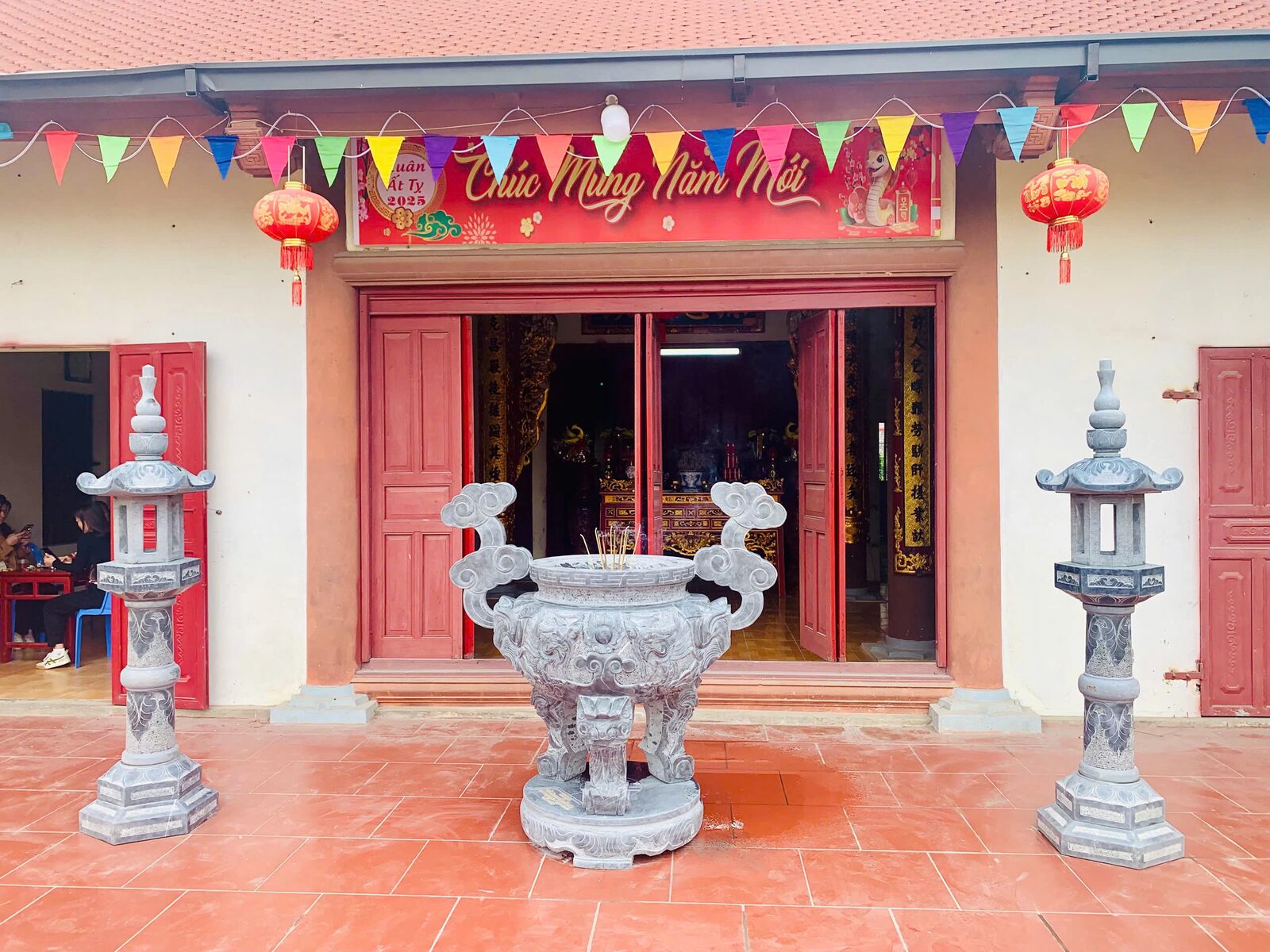
Overview & history
Tram Bac Communal House (Đình Trạm Bạc), together with the tomb of the progenitor of the Nguyen Dinh and Nguyen Khoa lineages, stands in Tram Bac hamlet, Le Loi commune, An Duong district, Hai Phong, about 4 km from the district center. It is a traditional spiritual and cultural architectural work of the people of Tram Bac village.
History
The communal house was built in 1849 (second year of the Tu Duc era) by provincial governor Nguyen Khoa Duc. It venerates four tutelary deities — Dong Hai Dai Vuong, Nam Hai Dai Vuong, Trung Nhac Dai Vuong and Nguyen Khoa Duc himself — credited with founding the village, building its communal house and shrine, and fighting sea raiders; all fell in battle on the first day of the fourth lunar month and have been worshipped by villagers since.
In 1970 the building was dismantled for materials to construct public works such as a school and warehouses, and most of its ritual objects were lost or dispersed among villagers. At the villagers' request the sanctuary was rebuilt in 2002, and in 2009 the front ceremonial hall was reconstructed. On 17 January 2014, the Hai Phong People's Committee issued Decision 236-QD/UBND recognizing Tram Bac Communal House and the ancestral tomb as a city-level historical relic.
Architecture
The original house stood on a raised mound facing southeast, laid out in the traditional Dinh (T-shaped) plan with a three-bay front hall and one-bay sanctuary, built with gabled end walls, ironwood framing, tiled roofs and brick floors. Today the complex covers 1,047.2 m² and follows the same Dinh-shaped plan with a three-bay front hall, a connecting bay and a two-bay sanctuary, facing south as before. Two banyan trees over a century old stand before the courtyard, and a stele pavilion houses a stone stele dated 1853 (Tu Duc 6) recording the founding of Tram Bac village and the construction of its communal house and shrine.
Within the grounds lies the tomb of the progenitor of the Nguyen Dinh and Nguyen Khoa lineages, relocated from the Trang Due industrial zone and rebuilt on a 1,200 m² plot; it preserves the stone tomb restored by Nguyen Khoa Duc in 1852.
Festivals
Traditional festivals are held annually on the 15th day of the second lunar month and the 1st day of the fourth lunar month, along with field-opening and harvest rites. Festivities include folk games such as balance-bridge crossing, Chinese chess, to tom card games, tug of war and cheo singing — a distinctive cultural tradition of Tram Bac village and the northern delta region.
Worship & blessings
Dedicated to: The village tutelary deities credited with founding and protecting Tram Bac village.
Commonly prayed for: Peace for the villagers, favorable weather and bountiful harvests.
Photos
📷 Contribute photosVisiting tips
- Dress modestly; remove hats and keep quiet inside the main hall.
- Incense, flowers and offerings are usually sold right outside the gate; light an odd number of sticks (1 or 3).
- Most pagodas open from early morning to evening and are free to enter (some major sites charge a small scenic fee).
- Full-moon days, the 1st of the lunar month and Tet are very crowded; visit on weekday mornings for a quiet experience.
- Ask permission before photographing inside shrines; do not touch statues or altar objects.
Read more & references
Useful links to learn more before your visit:
Location
Coordinates: 20.85403, 106.57380
🧭 Directions on Google MapsOther pagodas in Hải Phòng

