Tam Thanh Pagoda
Lạng Sơn(Chùa Tam Thanh)
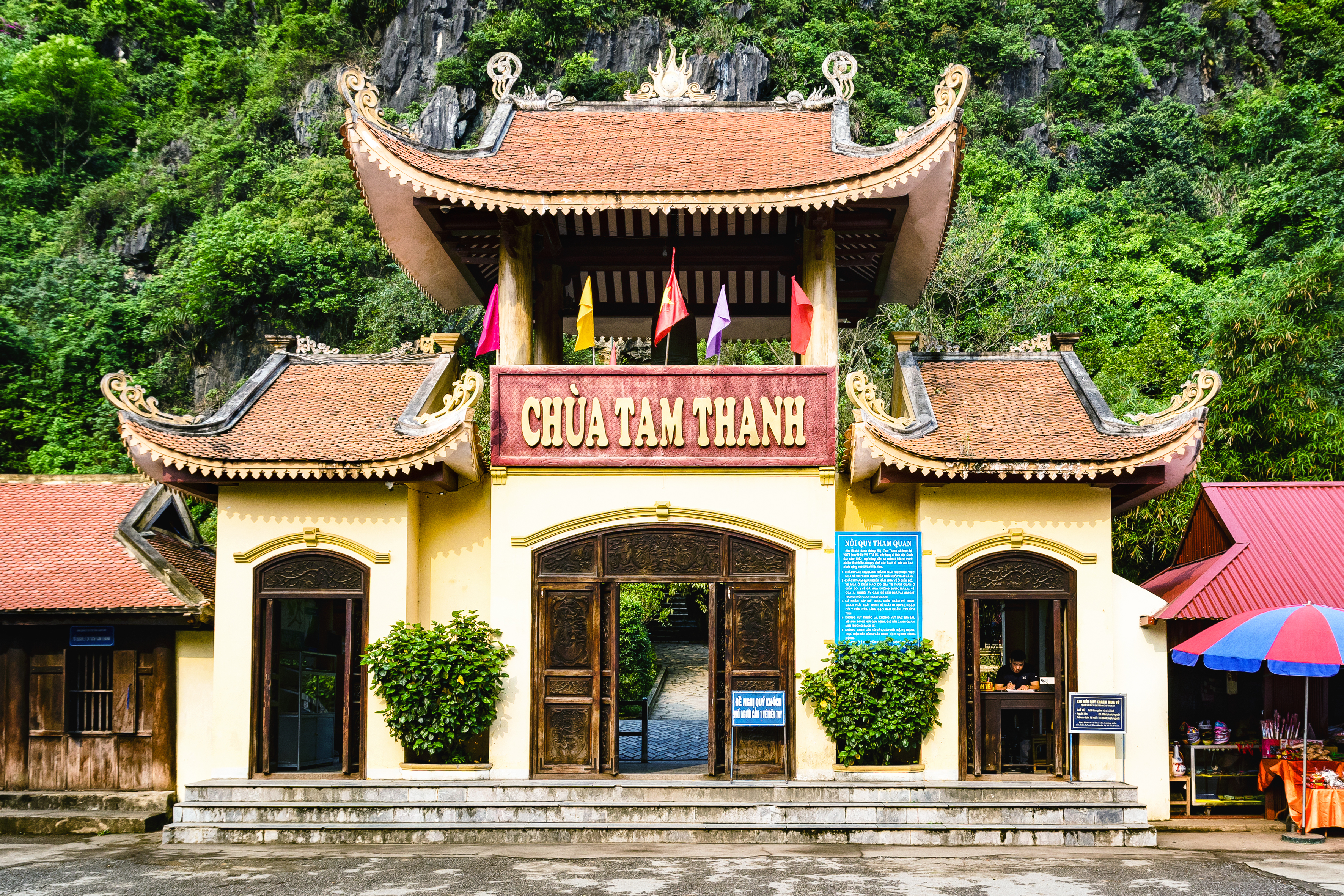
Overview & history
Tam Thanh Pagoda is located inside a rocky mountain cave (thus also known by another name, Tam Thanh Cave) in Tam Thanh ward, Lạng Sơn province.
According to the historical record Đại Nam Nhất Thống Chí, Tam Thanh Pagoda dates back to the Lê dynasty, and was originally situated in Vĩnh Trại village, Thoát Lãng district.
Characteristics
Tam Thanh Pagoda features a white statue of Amitābha Buddha with soft, graceful lines, carved in relief into the rock wall since the 15th century. This statue bears the artistic style of the Lê – Mạc period (16th–17th centuries), sculpted in a standing posture within the shape of a bodhi leaf. The statue is 202 cm high and 65 cm wide, dressed in a kasaya robe that drapes down to the feet, with both hands pointing downwards in the gesture of bestowing nectar.
In addition, the pagoda also has the Âm Ti Lake, with clear blue water all year round and countless beautiful natural stalactites formed over thousands of years.
Tam Thanh Cave
Tam Thanh is a complex of three caves: Nhất Thanh, Nhị Thanh, and Tam Thanh, located within Tam Thanh Pagoda. Tam Thanh Cave lies in a mountain range shaped like a herd of elephants resting on green grass. The Tam Thanh cave is halfway up the mountain. The cave entrance faces east, about 8 metres high, with access via 30 stone steps carved into the mountainside, shaded by dense trees that block the sunlight. On the right wall of the cave is an inscribed poem by Ngô Thì Sĩ (1726–1780) when he was governor of Lạng Sơn.
Tam Thanh is renowned as the "First of the Eight Scenic Spots of Xứ Lạng" (which includes four sites: Nhị Thanh Cave, Tam Thanh Cave, the Mạc Dynasty Citadel, and Lady Tô Thị).
Cultural Value
In addition to its scenic value, Tam Thanh Pagoda is also known for its cultural significance. Inside the pagoda cave remains a rich system of stone steles inscribed by scholars and poets through various historical periods. Among them, stele number 4 is the oldest (Ma Nhai stele), carved in the 2nd year of Lê Vĩnh Trị (1677), recording in detail the restoration and embellishment of the pagoda.
Festival
Tam Thanh Pagoda holds its main festival on the fifteenth day of the first lunar month every year.
Folk Verse
A folk verse about the Lạng Sơn region is closely associated with Tam Thanh Pagoda, and this verse has been familiar to many generations of Vietnamese people as it is printed in school textbooks.
Đồng Đăng has the Kỳ Lừa market
There is Lady Tô Thị, there is Tam Thanh Pagoda
Photos
📷 Contribute photosVisiting tips
- Dress modestly; remove hats and keep quiet inside the main hall.
- Incense, flowers and offerings are usually sold right outside the gate; light an odd number of sticks (1 or 3).
- Most pagodas open from early morning to evening and are free to enter (some major sites charge a small scenic fee).
- Full-moon days, the 1st of the lunar month and Tet are very crowded; visit on weekday mornings for a quiet experience.
- Ask permission before photographing inside shrines; do not touch statues or altar objects.
Read more & references
Useful links to learn more before your visit:
Location
Coordinates: 21.85583, 106.74333
🧭 Directions on Google MapsReferences
- Vietnamese Wikipedia
- https://thuvienphapluat.vn/van-ban/Xay-dung-Do-thi/Thong-tu-38-2013-TT-BTNMT-Danh-muc-dia-danh-dan-cu-son-van-thuy-van-kinh-te-xa-hoi-Lang-Son-212498.aspx
- https://tools.wmflabs.org/geohack/geohack.php?language=vi&pagename=Ch%C3%B9a_Tam_Thanh¶ms=21_51_21_N_106_44_36_E_type:landmark_region:VN
Other pagodas in Lạng Sơn
